vision
History of the Trail
Follow the Fall Line, and you follow the footsteps of the people and movements that defined Central Virginia—and helped define America.
Historic and Geologic Significance
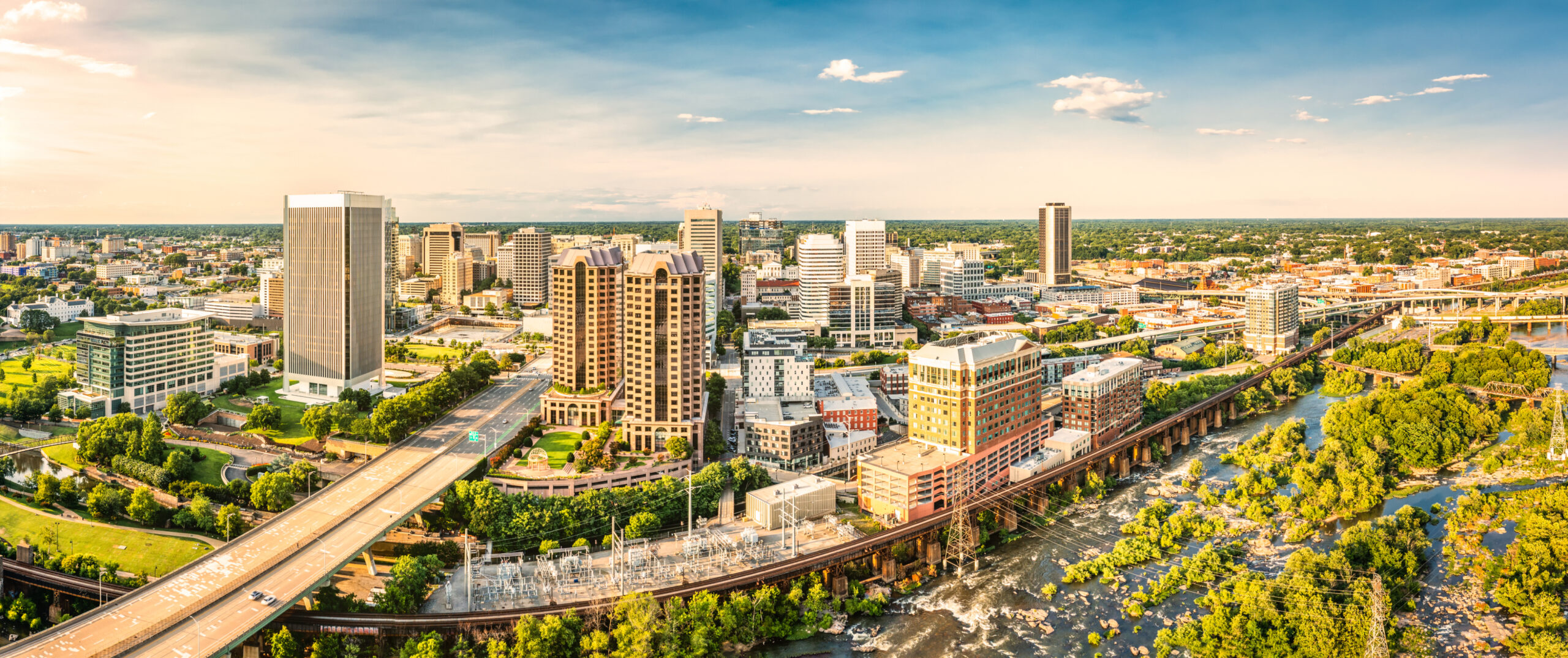
The Fall Line alignment will connect areas of significant historical and cultural impact through Central Virginia. From Native American villages and early colonial settlements built on innovations in industry and metalworking along the James and Appomattox Rivers to battles that defined the American Civil War, and from era-defining slave rebellions to Black and African American social and thought leadership, this transformational trail will not only connect our region with a world-class spine for active transportation, it will provide access to understanding our peoples’ lives, stories, and accomplishments.
Tracing Culture
Because of the natural break it creates and the opportunities it provides, the Fall Line also created sites of interaction between different cultures. Prior to European settlement, it acted as a boundary between lands occupied by different Native American nations.
Cultural artifacts from these communities are still being found along the Appomattox River, in what is now Colonial Heights and Petersburg. The Fall Line also marks important sites in Black history from the arrival of the first enslaved Africans in 1619, to the Civil War, emancipation, the Jim Crow era and the modern civil rights movement, and up through today.
When complete, the Fall Line trail will reflect the deep historical, cultural, and geologic importance of this feature.
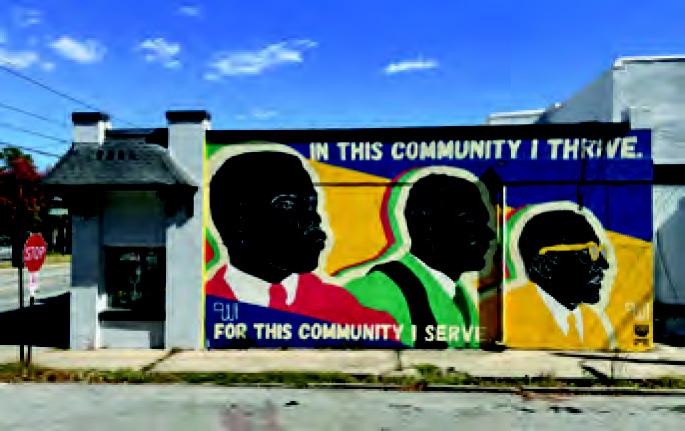
Celebrating Black History Along the Trail
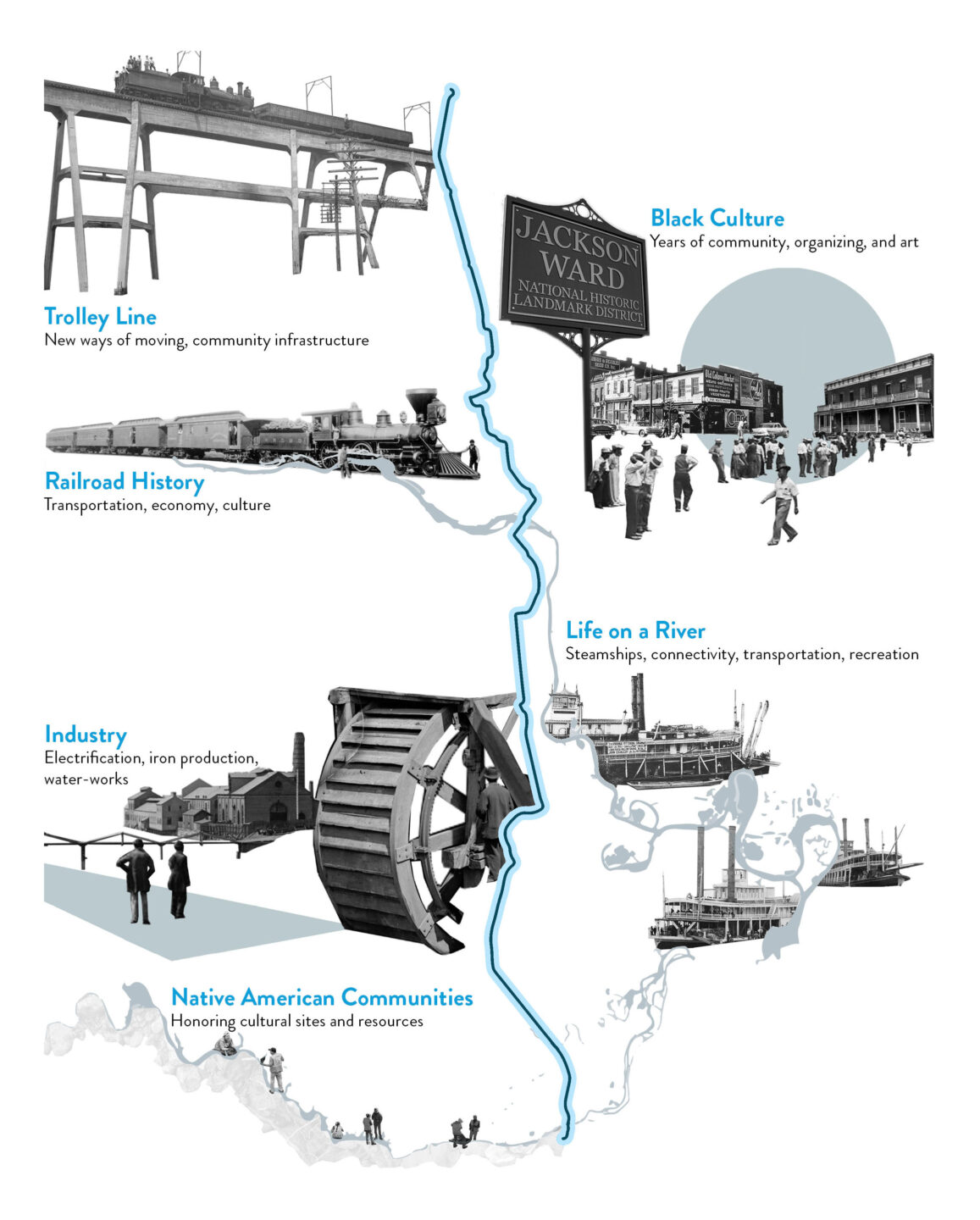
The first enslaved Africans were off-loaded in Virginia in 1619 and the Richmond slave market grew rapidly. The Richmond Slave Trail, which is easily accessible from the Fall Line, captures this awful chapter in the region’s history.
Fall Line users will discover numerous Civil War sites and tales (e.g., T-Pott Bridge); inspirational stories of people like Maggie Walker and Bill “Bojangles” Robinson; significant churches, public art, civic buildings and two Historically Black Colleges and Universities (HBCUs); as well as less well-known details of important events, such as Gabriel’s Rebellion, as they travel the corridor.
The geography of the region defined by race to this day. The trail leads people through historically Black communities such as Jackson Ward, carved in two by the construction of the Interstate; neighborhoods blighted by urban renewal and redlining; predominantly low-income immigrant communities that bear the brunt of multiple social inequities. Their stories can be better understood because of the Fall Line; and a simple trail can teach us how to do better in the future.
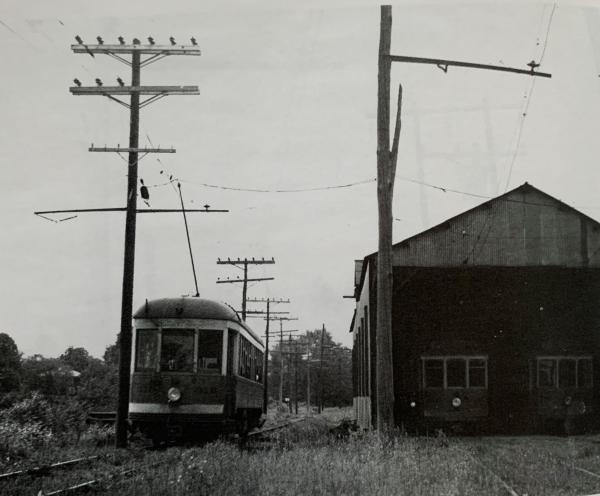
Remembering the Ashland Trolley Line
The historic Ashland Trolley Line, decommissioned in 1938, is the basis of the northern alignment of the Fall Line and is a glimpse into the beginnings of rail transit and electric power transmission in the Richmond region.